Lower Back & Sciatica Pain Support
Understanding lower back and sciatic discomfort through structural stress and internal stability
Why does it happen?
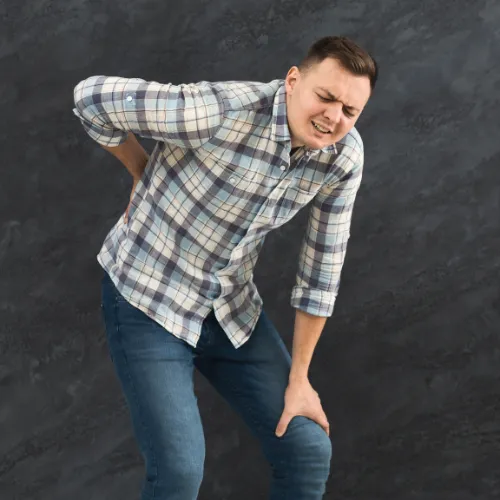
Lower back and sciatic-related pain may present in different ways. Some people experience sudden, acute pain, while others struggle with long-term, recurring discomfort. From a Traditional Chinese Medicine (TCM) perspective, these patterns often reflect both structural factors and underlying functional weakness, rather than a single cause.
Acute lower back pain commonly arises from sudden strain, incorrect lifting, or improper load-bearing movements. In these cases, the spine, surrounding joints, or soft tissues may be abruptly stressed or displaced. When pain appears suddenly, timely support is especially important, as early intervention may help prevent the body from developing compensatory patterns that allow discomfort to linger..
Chronic or recurring lower back and sciatic pain, however, is often more complex. While structural issues such as reduced disc elasticity, spinal misalignment, or long-term postural imbalance may be involved, TCM places strong emphasis on the body’s upright vitality.
When upright vitality is insufficient, muscles and fascia may lose their ability to properly stabilize and support the skeletal structure.
In these situations, even if manual adjustment temporarily restores alignment, the underlying weakness remains. Without adequate internal support, bones and joints may gradually drift back into imbalance, making recurrence more likely. This is one of the most common reasons why lower back pain repeatedly returns after short-term relief.
Sciatic-related discomfort is often associated with this pattern. When muscles, connective tissue, and circulation fail to provide stable support, nerve pathways may become irritated or compressed, leading to radiating pain, tightness, or discomfort extending into the hips or legs.
From this holistic viewpoint, lasting improvement requires more than correcting structure alone. Supporting the recovery of upright vitality, restoring balanced circulation, and encouraging appropriate movement and strengthening are all essential components. When these elements work together, the body is better able to maintain alignment, reduce strain on the lower back, and support long-term functional stability.
Our Approach According to
TCM Theory……
Our approach is grounded in classical Traditional Chinese Medicine (TCM) theory, where the body is viewed as an interconnected whole rather than a collection of isolated parts.
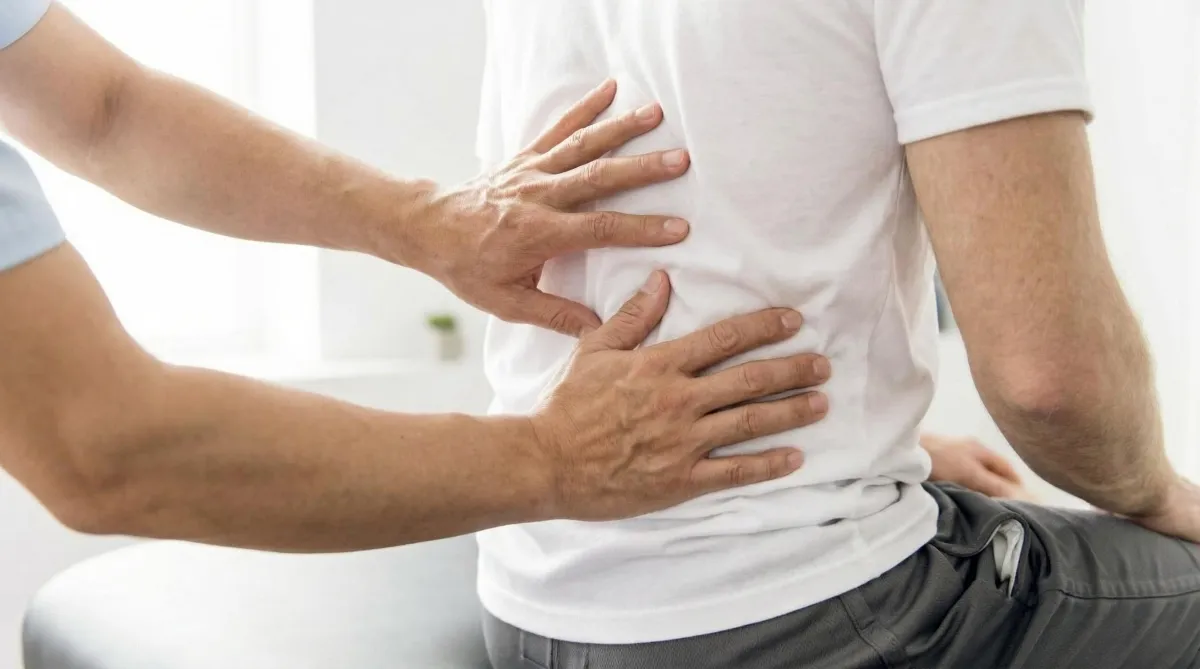
We begin with a comprehensive observation-based assessment. This may include pulse reading and tongue observation to understand the condition of the internal organs, qi, and blood circulation. Through hands-on body assessment, we observe structural relationships involving the spine, ribs, pelvis, and limbs. Clients may also be guided through simple movements to help identify areas of imbalance, compensation, or restriction. In addition, posture, skin tone, and overall body presentation offer valuable clues about the cardiovascular, respiratory, and metabolic systems.
All of these steps help us understand what factors are contributing to the body’s imbalance, and how discomfort or pain may have developed over time. The goal is not to chase symptoms, but to determine what should be addressed first and in what order, so the body can gradually regain its own balance.
This is not a “treat the head when the head hurts” approach. Instead, we consider how different systems influence one another. In many cases, after one or several sessions—combined with appropriate adjustments in daily habits, rest patterns, nutrition, and simple corrective movements—clients are able to re-enter a healthier recovery cycle driven by their own body.
In some situations, pain has been present for a long time and may involve not only physical strain, but also mental and emotional burden. When this occurs, progress requires patience and collaboration. Sometimes the priority is to first reduce discomfort; in other cases, restoring energy and resilience comes first. These decisions are always explored on an individual basis.
Overall, our work is rooted in foundational TCM principles, with a strong emphasis on holistic thinking, personalization, and flexibility. Supporting the body as a whole—and respecting each person’s unique condition—is at the core of how we continue to learn, refine, and provide care.
Discuss your current discomfort and explore personalized, non-invasive support options.

Shou Ren Zhai Health & Wellness Center
provides non-invasive pain support
based on Traditional Chinese Medicine theory,
serving Houston & Katy, Texas.
This page focuses on acute and chronic lower back pain
and sciatic discomfort,
explained through spinal stress, reduced disc elasticity,
movement imbalance,
and diminished upright vitality,
using a holistic, consultation-based approach.
This site is not affiliated with or endorsed by YouTube, Google, or Facebook. All trademarks belong to their respective owners.
********************************************************************************************************************************************************************
This site is not affiliated with or endorsed
by YouTube, Google, or Facebook.
All trademarks belong to their respective owners.
本网站与 YouTube、Google 或 Facebook 无关联,
也未获得其认可。
所有商标均归其各自所有者所有。
****************************************************
Wahgen Inc. © 2026. All Rights Reserved.