Why Someone Can Feel Cold Even With Fever: A Post-Miscarriage Case in Traditional Chinese Medicine
⚠️ For educational purposes only. Not medical advice. Consult a qualified healthcare professional before making health decisions.
⚠️ 本文仅供健康教育目的,不构成医疗建议、诊断或治疗方案。如有健康问题,请咨询合格医疗专业人员。
Post-Miscarriage: Chills in Summer and Afternoon Fever
Post-Partum Deficiency-Heat | 产后虚热案
Introduction: A Winter Coat in the Middle of Summer
引子:夏日里穿不脱的棉衣
This was a very unusual medical case occurring in the middle of summer. A middle-aged female patient felt intensely cold despite the scorching weather and had to wear thick clothing. Every afternoon her body temperature rose to about 38.2°C (100.8°F), and the slightest movement made her sweat heavily. After sweating, she became even more sensitive to cold and wind. By morning the fever would subside, but she would sweat even more and feel dizzy, exhausted, and troubled by heart palpitations.
这是一个发生在盛夏的奇特病案。一位中年女性患者,在炎热的夏天,却怕冷不已,不得不穿着厚衣服。更奇怪的是,她每天午后发热(38.2℃),稍微一动就大汗淋漓。汗出后更加怕风怕冷。到了天亮,热退下来,却汗出更多,头昏、心慌、疲倦得厉害。
The Trigger: Blood Loss After Miscarriage
起因:流产失血过多
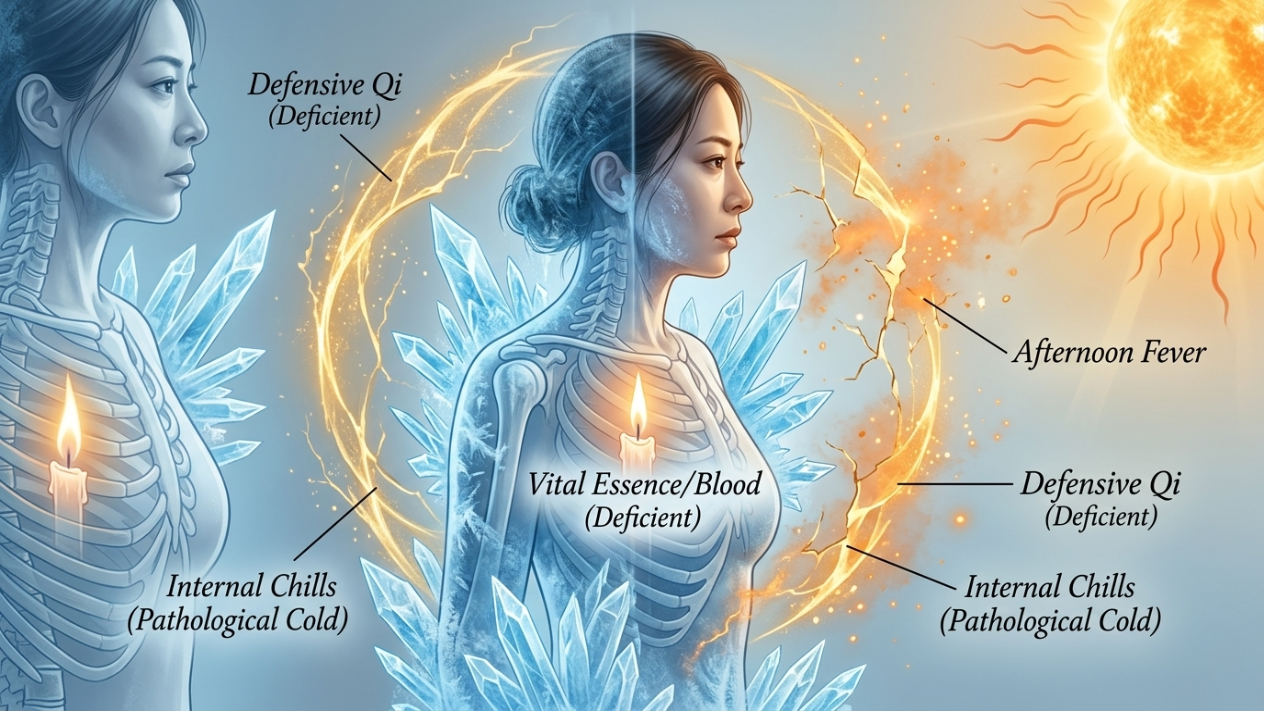
One month earlier, the woman had undergone a uterine curettage procedure after a miscarriage, losing a significant amount of blood. In Chinese medicine, blood is not just a fluid — it is the carrier of Ying Qi (nutritive energy). When blood is lost in large quantities, the nutritive system becomes weakened and Wei Qi (defensive energy) loses its foundation. The result: spontaneous sweating, sensitivity to cold, and afternoon fever — a classic pattern of disharmony of Ying and Wei.
一个月前,这位女性因为流产,做了刮宫手术,失血甚多。在中医看来,血不仅是液体,更是营气的载体。大量失血,就会导致营血虚弱。营血虚弱时,卫气失去依附,于是出现:自汗、畏寒、午后发热——这在中医看来是一种典型的营卫失调。
Why the Fever Appears in the Afternoon
为什么会午后发热
Chinese medicine teaches that Yin and Yang rhythms change throughout the day. In the afternoon, Yin energy should increase. When Yin is deficient, it cannot anchor Yang. Yang energy floats outward — manifesting as fever. This reflects the concept that the human body mirrors natural rhythms.
中医认为人体阴阳随时间变化:上午阳气渐盛;午后阴气渐长。阴虚的人,阴不足以收敛阳,于是阳气浮越于外,出现发热。这体现了中医天人相应的思想。
Formula: Modified Guizhi Tang and Results
方药:加味桂枝汤与疗效
The core formula was Guizhi Tang, with additions of Huangqi (Astragalus), Danggui (Angelica root), Zaoren (Jujube seed), and Wu Wei Zi (Schisandra) — to rebuild energy, nourish blood, control excessive sweating, and calm the nervous system.
核心方剂是桂枝汤,在此基础上加入黄芪、当归、枣仁、五味子——补气、养血、止汗、安神。
Results: According to the case record, the patient reported sleeping more soundly on the first night. After the second dose, excessive sweating decreased significantly and body temperature gradually normalized. Within days she reported reduced sensitivity to wind. After ten days of continued supportive treatment, her symptoms had largely resolved.
疗效:据记录,服药当夜,患者反映睡眠有所改善。继续服药一剂,自汗明显减少,体温逐渐趋于正常。几天后,患者反映已不再明显怕风。后续调理十天,症状基本消失。