30 Years of Chronic Illness, Still Getting Thinner | Katy TX
Thirty Years of Chronic Illness.
Still Getting Thinner.
What Sweet and Warm Did That Nothing Else Could.
A case from Shou Ren Zhai TCM Wellness Center · Katy, TX

He was 70. The medical history was long: hypertension for twenty years, diabetes for sixteen. One year earlier, his lab work had come back with elevated BUN, creatinine, and urine protein — early chronic kidney disease, a common destination for patients whose blood sugar and blood pressure have been poorly controlled for a decade or more.
He had been taking Chinese herbal granules. They were not helping.
What brought him in was a year of progressive weight loss he couldn’t explain and couldn’t stop. Not dramatic, but relentless. Along with it: intermittent fatigue, a sensation of something lodged in his throat, poor appetite, frequent urination including three to four times a night, heaviness and aching in the lower legs.
His face had taken on a dark, dry, dull quality — the color of something that has been slowly running out of what nourishes it. His lower eyelids were pale. The skin on his lower legs was thickened, rough, and scaling. His feet were cold, his hands warmer. He preferred cold food — one of the few concessions his body made to what felt like internal heat.
He was afraid of wind, afraid of cold. No sweating. Periodic chest tightness and palpitations. Waist pain, lumbar aching. Dreams disturbing his sleep. Stools sticky and unsatisfying.
His body was drying out from the inside, accumulating fluid in the wrong places, and losing ground on every front.
The classical formula used in this case was sweet and warming. Not a single diuretic. Not a single drug to lower the kidney markers. Not a cooling herb in sight.
The Paradox at the Center of This Case

This case contains two apparent paradoxes that are worth understanding — because they appear constantly in complex chronic illness, and because getting them wrong is what keeps many patients stuck.
Paradox One: Fluid in the Body, Fluids Running Low
He had signs that pointed to fluid accumulation: frequent urination, nighttime urination, a sensation of phlegm in the throat, heaviness in the legs. The standard response to excess fluid in the body — whether in modern or traditional medicine — is to drain it: diuretics, herbs that promote urination, formulas that clear dampness.
But he also had signs that pointed to fluid deficiency: pale lower eyelids, thickened scaling skin on the legs, dark dry face, progressive weight loss, preference for cold food. A body depleted, not just congested.
These two pictures seem to contradict each other. They don’t. Classical Chinese medicine has a name for this pattern: fluid deficiency with water excess — the state in which the body is so depleted in healthy, nourishing fluids that it can no longer metabolize water properly. The fluids accumulate in the wrong form, in the wrong places, while the tissues that need nourishment go without.
You cannot sweat this water out — the surface defenses are already depleted. You cannot purge this water — the digestive foundation cannot sustain the attack. You cannot drain this water with diuretics — they consume the very fluids already running low. The only path is sweetness: sweet herbs that nourish the depleted tissues directly, restoring the body’s capacity to metabolize its own fluids normally.
This principle — Sweet can govern water — is one of the oldest and most counterintuitive in the classical pharmacopeia. It runs directly counter to the reflex to drain. But in a body depleted at its core, draining accelerates the depletion. Only nourishment restores the capacity to self-regulate.
Paradox Two: Heat in a Cold Body
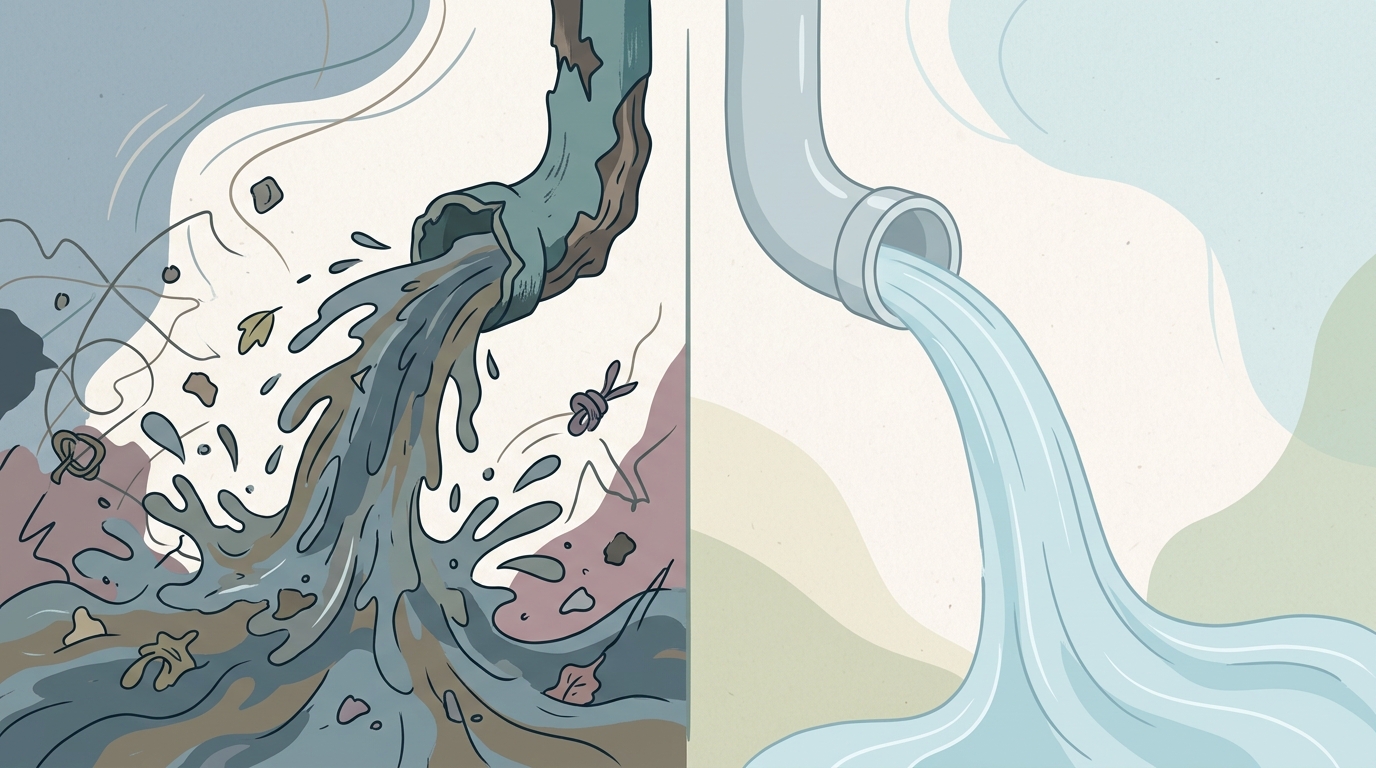
He preferred cold food. His tongue was purple-red. His stools were sticky and difficult — signs of heat and accumulation. Yet he was cold, afraid of wind and drafts, with cold feet and no sweating.
Again, two pictures that seem contradictory. Again, they are not.
This is what Classical Chinese medicine calls deficiency heat arising on a foundation of deficiency cold. When the body’s center — the digestive and generating capacity — is chronically depleted, it cannot produce the resources needed to regulate temperature properly. The cold at the foundation produces a restless, superficial heat above — the same mechanism described in the previous case in this series, but here embedded in a much more complex chronic illness picture.
Treat this heat with cooling herbs — and you damage the depleted center further. Treat this heat by warming and rebuilding the center — and the superficial heat resolves, because the regulation that was missing has been restored. This is the principle of: Warm sweetness removes heat.
Both paradoxes point in the same direction: this body needs to be nourished, not cleared. Replenished, not drained. Warmed from within, not cooled from without.
Huangqi Jianzhong Tang: Build the Center, Rebuild the Body
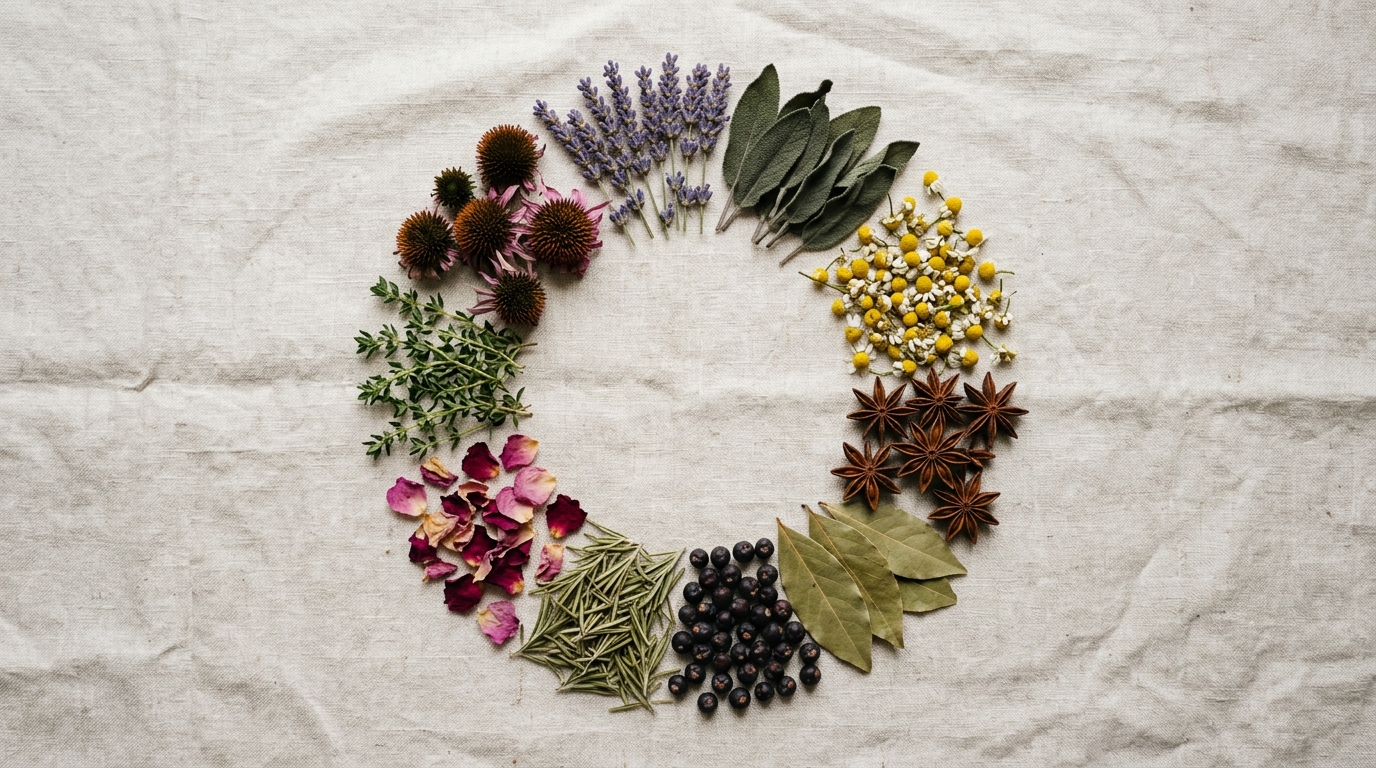
Sun, L.Ac., used Huangqi Jianzhong Tang — Astragalus Construct-the-Middle Decoction. An extension of Xiao Jian Zhong Tang, with the addition of a large dose of Astragalus.
Astragalus (Huangqi) — secures and rebuilds the body’s surface defensive layer, the Wei Qi. In Classical TCM, Astragalus is specifically a surface herb for the Taiyin layer — it rebuilds the body’s capacity to hold itself together at the boundary between inside and outside. Maltose (Yi Tang) — the heart of the formula. Sweet, deeply nourishing. Replenishes the depleted fluids and blood. Governs the accumulated water through sweetness, not drainage. White peony (double dose) — nourishes Yin and blood, addresses the heat that has arisen from deficiency. Cinnamon twig — warms and moves, ensures the replenishment reaches where it is needed. Ginger, jujube, licorice — rebuild the center that generates everything else.
This formula does not target the kidneys. It does not lower blood pressure or blood sugar directly. It does not drain the accumulated fluid or suppress the superficial heat.
It rebuilds the body’s generating capacity — so that the body can begin, gradually, to address its own imbalances from a position of restored resources.
This is the approach Classical Chinese medicine takes to complex, multi-system chronic illness: not attacking individual markers, but restoring the foundation from which the body regulates everything.
A Note on Chronic Illness and Integration
This patient had been on Western medications for hypertension and diabetes for decades. The classical formula was used alongside these — not instead of them. The approach here is integrative: Western medicine managing the acute markers, classical Chinese medicine supporting the underlying depletion and dysregulation that the Western medications do not address.
The progressive weight loss, the fatigue, the worsening kidney function, the cold feet and dark dry face — these are not primarily caused by insufficient medication. They are the long-term expression of a body that has been chronically depleted and has never received the support it needed to maintain its generating capacity.
Classical Chinese medicine has been developing frameworks for exactly this kind of complex, multi-layered, long-standing depletion for two thousand years. It is not a competitor to the endocrinologist or the nephrologist. It addresses the territory they don’t map.
The body has been getting thinner for a year. The chart has been getting thicker for thirty. They are related. And the connection runs through the depleted center that every classical formula in this series has been working to rebuild.
If you or someone in your family is managing complex chronic illness — diabetes, hypertension, kidney disease, or the accumulated weight of years of multiple diagnoses — and finding that the medications manage the numbers but not the person, we would be glad to talk.
We see complex chronic cases at Shou Ren Zhai TCM Wellness Center in Katy, TX.
Shou Ren Zhai TCM Wellness Center
守仁中医馆 · Classical Structural Chinese Medicine
440 Cobia Dr #1901, Katy, TX 77494
📞 210-861-4339·🌐 wahgen.com/shourenzhai
Complex chronic illness, multi-system depletion, integrative support —
we work alongside your medical team to address what they don’t map.
Contact us to schedule a consultation.
⚠For general educational purposes only. Does not constitute medical advice, diagnosis, or treatment. TCM is not a replacement for conventional medical management of hypertension, diabetes, or kidney disease. Please continue working with your physician and do not alter medications without medical supervision. Individual results vary significantly. Shou Ren Zhai TCM Wellness Center is a health and wellness center, not a licensed medical clinic.
三高缠身三十年,越补越虚
——只有甘能治水,只有暖能除热
守仁中医馆 · 病案手记
他七十岁。
病历很厚:高血压二十年,糖尿病十六年,一年前查出尿素氮、肌酐、尿蛋白偏高——慢性肾病,血糖血压长期控制不佳之后常见的状态。
他一直在服用中药颗粒剂。没有明显效果。
能让他朋友带他来的,是一年来不明原因、止不住的进行性消瘦。连同间歇性乏力,咽喉异物感,食欲差,白天小便四五次、夜尿三四次,下肢酸软沉重。
他的脸色晦暗干涩,下眼睑淡白。小腿皮肤增厚脱屑。脚凉手温。喜欢吃冷食——这几乎是他的身体对内部那点热感的唯一妥协。
怕风怕冷,无汗。阵发性胸闷心悸。腰痛腰酸。梦多,大便黏滞不爽。
这个案子的两个悖论
这个案子里有两个看似矛盾的地方,值得细说——因为它们在复杂慢性病里反复出现,搞错了,就是为什么那么多患者越治越难。
悖论一:身体有水,津液不够
他有一组提示水饮积聚的症状:夜尿频多,咽有异物感,双腿沉重。常规的应对是祛湿利水——利尿,渗湿,清化痰饮。
但他同时有一组提示津液不足的症状:下睑淡白,下肢皮肤甲错脱屑,面色晦暗干涩,进行性消瘦,喜冷食。明显的津液不足。
两幅画面看似矛盾,其实不然。中医对这个状态有一个精准的表述:津虚水胜——身体在健康、滋养性的津液严重不足的情况下,无力正常代谢水液,水以错误的形式堆积在错误的地方,而真正需要濡养的组织却得不到滋润。
不可发汗——体表防御已经亏虚,再发汗就是雪上加霜。
不可攻下——中焦根本撑不住攻伐。
不可利小便——利水利的是本来就不够的津液。
唯一的出路:以甘治水。用甘味药直接滋养耗竭的组织,恢复身体自身正常代谢水液的能力。
甘能治水——这是经方体系里最古老也最反直觉的法则之一。和「见水祛水」的本能反应背道而驰。但对一个中焦已经耗竭的身体,祛水只会加速耗竭,唯有滋养才能恢复自我调节的能力。
悖论二:寒底上的热
他喜冷食,舌紫红,大便黏滞——热象。但他同时怕风怕冷,脚凉无汗——寒象。
又是两幅看似矛盾的画面。又是不矛盾。
这是上一个案子里讲过的同一个机制,只是嵌在更复杂的慢性病底色里:中焦长期亏虚,身体无力正常调节温度,寒底上浮起一层虚热。
用苦寒清热——进一步损伤已经亏虚的中焦,底子越来越薄。
用甘温重建中焦——中焦恢复,调节能力回来,浮热自然消散。
这就是「甘温除热」。
两个悖论,指向同一个方向:这个身体需要被滋养,不需要被清泻。需要被填补,不需要被排空。需要从内部被温暖,不需要从外部被清凉。
黄芪建中汤:建中焦,重建身体
老孙用的是黄芪建中汤——小建中汤加大剂量黄芪。
黄芪——重建体表卫气,固护太阴表层。在经典经方体系里,黄芪是太阴的表药,专门修复身体表里之间那道失守的屏障。
饴糖——方子的核心。甘温,深层滋养,补充津血,以甘治水。
白芍(重用)——养阴养血,对治虚热。
桂枝——温通经脉,确保补益到达需要的地方。
生姜、大枣、炙甘草——重建中焦,恢复生化之源。
这张方子不针对肾指标,不直接降压降糖,不利水,不清热。
它重建身体的生化能力——让身体从一个资源恢复的位置,开始慢慢处理自身的失衡。
这是经典中医面对复杂多系统慢性病的路数:不是各个击破每一个指标,是重建那个调节一切的根基。
关于慢性病的整合思路
这位患者已经用了几十年的降压药和降糖药。经方是在这些药的基础上加进来的,而不是替代它们。这是整合的路数:西药管控急性指标,经方支撑西药触及不到的那层底层亏损。
进行性消瘦、疲惫、肾功能持续下滑、脚凉、脸暗——这些不是药吃得不够造成的。这是一个长期亏虚、从未得到恰当补益支持的身体,在岁月中慢慢耗尽它的储备。
经典中医在这片领域有两千年的积累。它不是肾内科、内分泌科的竞争者。它填补的,是那些科室没有绘制的地图。
病历越来越厚,身体越来越薄。关联两件事的那条线,正是那个亏虚的中焦。
如果你或家人正在面对复杂慢性病——糖尿病、高血压、肾病,或多年多病叠加的疲惫——药物管住了数字,但人还是越来越不对劲——守仁中医馆欢迎你来谈。
守仁中医馆 · Shou Ren Zhai TCM Wellness Center
结构中医 · Katy, Houston TX
440 Cobia Dr #1901, Katy, TX 77494
📞 210-861-4339·🌐 wahgen.com/shourenzhai
复杂慢性病、多系统亏损、整合支持——
我们填补西医没有绘制的那张地图。
联系我们,预约初诊。
⚠ 本文为教育性内容,不构成医疗建议或诊断方案。中医调养不能替代高血压、糖尿病及肾病的西医管理,请勿自行停减西药。每位患者情况不同,疗效存在个体差异。守仁中医馆为健康wellness中心,非医疗诊所。
© 2026 守仁中医馆 · Shou Ren Zhai TCM Wellness Center · Katy, Houston TX